
The chain is the heart of your bike. Whether it’s a road bike speeding on asphalt, a mountain bike jumping through muddy trails, or a city bike used daily, a well-maintained chain ensures smooth gear shifts, more efficient pedaling, and a longer-lasting drivetrain.
In this article, we’ll guide you step by step on how to clean and lubricate your chain, with illustrations and practical advice to avoid common mistakes.
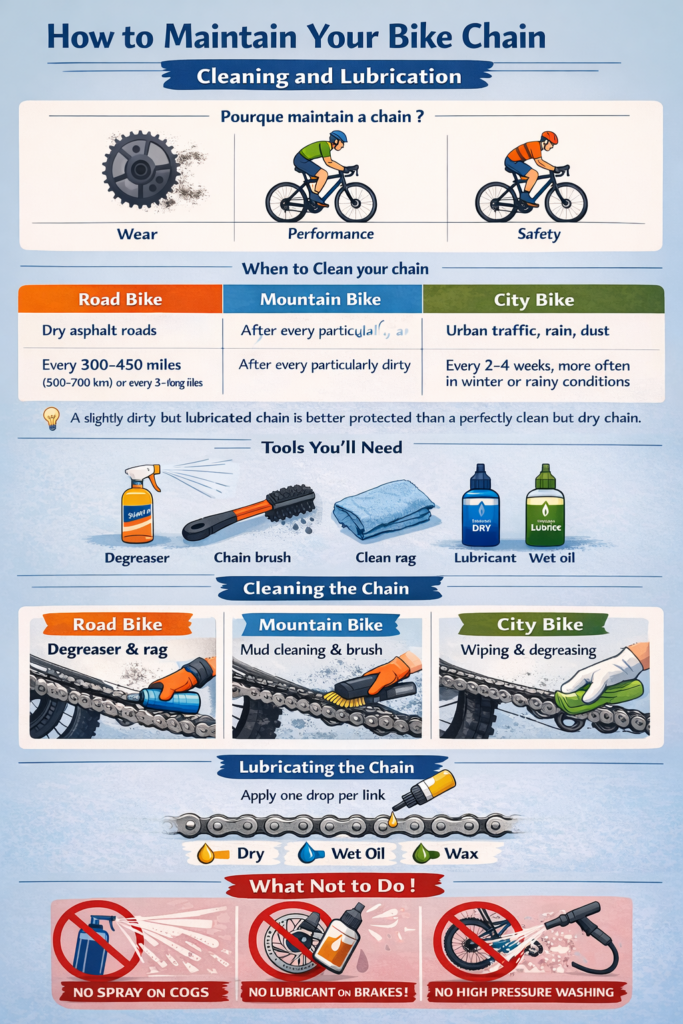
Why Maintain Your Chain?
- Prolong drivetrain life: a dirty chain accelerates wear on cogs and chainrings.
- Improve performance: a clean, lubricated chain reduces friction.
- Reduce noise: the annoying squeak disappears with proper maintenance.
- Safety: a well-maintained chain lowers the risk of breakage or derailment.
When to Clean Your Chain
The frequency depends on your usage and the weather conditions:
| Bike Type | Usage | Recommended Frequency |
|---|---|---|
| Road Bike | Dry asphalt roads | Every 300–450 miles (500–700 km) or every 3–4 long rides |
| Mountain Bike | Muddy or dusty trails | After every particularly dirty ride |
| City Bike | Urban traffic, rain, dust | Every 2–4 weeks, more often in winter or rainy conditions |
💡 A slightly dirty but lubricated chain is better protected than a perfectly clean but dry chain.
Tools You’ll Need
- Chain degreaser (preferably biodegradable)
- Chain brush or old toothbrush
- Clean rag
- Suitable lubricant (dry oil, wet oil, wax)
- Bike stand (optional but useful)
Step 1: Cleaning the Chain
1.1 Road Bike
- Wipe the chain to remove dust.
- Apply a light degreaser while pedaling backward.
- Gently scrub with a brush to remove stubborn residue.
- Wipe the chain dry with a clean rag.
1.2 Mountain Bike
- Remove mud with a low-pressure water spray.
- Generously apply degreaser.
- Scrub each link and cog with a stiff brush.
- Rinse with clear water and dry thoroughly.
1.3 City Bike
- Wipe the chain to remove dust and salt residues.
- Apply degreaser locally if needed.
- Dry with a clean rag.
Step 2: Lubricating the Chain
2.1 Choosing the Right Lubricant
| Lubricant | Ideal For | Advantages | Disadvantages |
|---|---|---|---|
| Dry oil | Dry, dusty conditions | Doesn’t attract dust | Wears off quickly in rain |
| Wet oil | Rain, mud, wet conditions | Highly protective | Attracts dirt and dust |
| Wax | Road and city bikes | Very clean, reduces dirt buildup | Less durable, needs frequent application |
I personally use Dr WACK’s F100 oil or ZEFAL’s Extra Wet chain lube for wet MTB conditions.
2.2 Correct Application
- Place the bike on a stand.
- Apply one drop to each inner link, on the cog side.
- Turn the pedals to spread the lubricant evenly.
- Wipe off excess with a clean rag.
What Not to Do
- Do not spray lubricant directly on the cogs or cassette: excess attracts dirt and dust.
- Never apply lubricant on brake rotors (road or mountain bikes): risk of total brake failure.
- Avoid high-pressure washing: water can enter bearings and hubs, causing rust and premature wear.
- Do not use dry lubricant in mud or rain: it will wash off immediately and the chain may rust.
- Do not ride with a used chain: it will badly impact the wear of the cassette pinions and of the chainring teeth.
Step 3: Regular Inspection
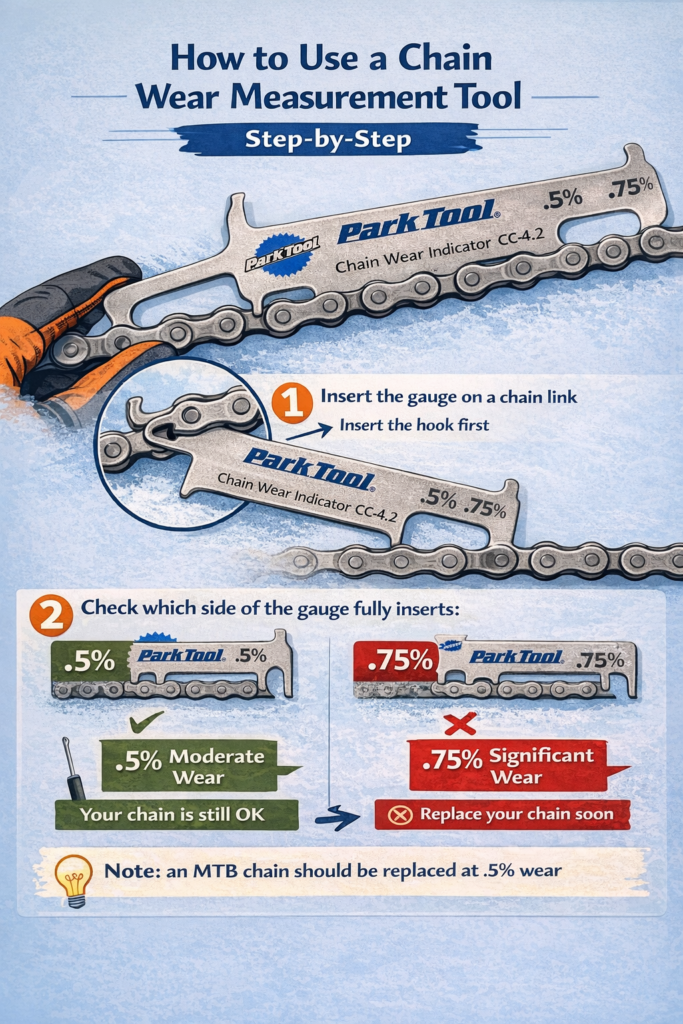
- Check chain tension and wear with a chain wear tool.
- Replace the chain if it exceeds 0.5–0.75% elongation (depending on bike type).
- Inspect cogs and chainrings: a healthy chain prolongs their lifespan.
As a rule of thumb the lifetime of a mountain bike chain is in the range of 1500 km. For road bikes it may extend to 3000/5000 km. It will however highly depend on the riding conditions and on your power.
Tips by Bike Type and Weather
- Road bike: dry oil in dry conditions, light cleaning.
- Mountain bike: wet oil after mud or rain.
- City bike: dry oil in summer, wet oil in winter on wet or salted roads.
- Humid climate: prefer wet oil and wipe after each ride.
- Dry/dusty climate: dry oil or wax to limit dust buildup.
Conclusion
Maintaining your chain is quick but essential: it improves performance, prolongs life, and ensures safety. With regular cleaning and lubrication, you’ll ride more efficiently, quietly, and without mechanical issues. These simple steps save time, money, and make every ride more enjoyable—whether it’s a city commute, a mountain trail, or a road adventure.
Sounds like a really helpful guide! I’ve been meaning to take better care of my bike chain – it’s great to have a clear plan for keeping it running smoothly.
Hi thanks for your comment: it encourages me to share my experience!