
Learn how to effectively maintain your electric bike (e-bike): cleaning, diagnostics, mechanical and electronic maintenance to extend its lifespan and prevent breakdowns.
Introduction
Maintaining an electric bike (e-bike) involves most of the same steps as maintaining a regular bicycle — brakes, drivetrain, steering, wheels, etc. — but certain aspects related to the motor and battery require special attention.
Why Maintenance Is Essential
Because of its higher weight and motor power, an e-bike puts extra stress on:
- the chain and sprockets,
- brake pads,
- bearings and axles.
These components wear out faster than on a non-electric bike.
Regular maintenance not only ensures your safety, but also extends the lifespan of your electric bike.
🧰 1. Basic Mechanical Maintenance
Regular Cleaning
- Clean your bike after each ride, especially after wet or muddy conditions.
- Use a gentle water spray or a sponge with mild detergent.
- Avoid high-pressure water jets near the motor, battery, or electrical connectors (risk of water infiltration).
Drivetrain
- Chain: Clean with a degreaser, dry it, and then lubricate to prevent dust accumulation.
- Sprockets and derailleur: Check for wear and replace if necessary.
Brakes
- Inspect brake pads and replace them when they are too thin.
- Check the function of mechanical or hydraulic brakes.
Tires
- Check tire pressure before every ride.
- Inspect tires for wear, cuts, or embedded debris.
🔋 2. Battery and Electrical System
Battery
- Keep the battery clean and dry.
- Avoid extreme temperatures: store it in a temperate, dry place.
- For long periods of non-use, store the battery with a charge between 40% and 80%.
Electrical Connections
- Regularly check connectors and cables.
- Make sure they are clean, properly secured, and free of corrosion.
📊 3. Diagnostics and Electronics
Certain electronic components — such as the motor, battery, or display — require specific diagnostic tools:
Using diagnostic tools provided by the manufacturer (Bosch, Shimano, etc.) allows you to:
- Check components individually
- Read fault codes
- Update software
- Monitor battery status and charge cycles
- Generate a test report, essential for warranty coverage
It’s almost magical: plug your bike into a computer, launch the diagnostic program, and you’re ready to go!
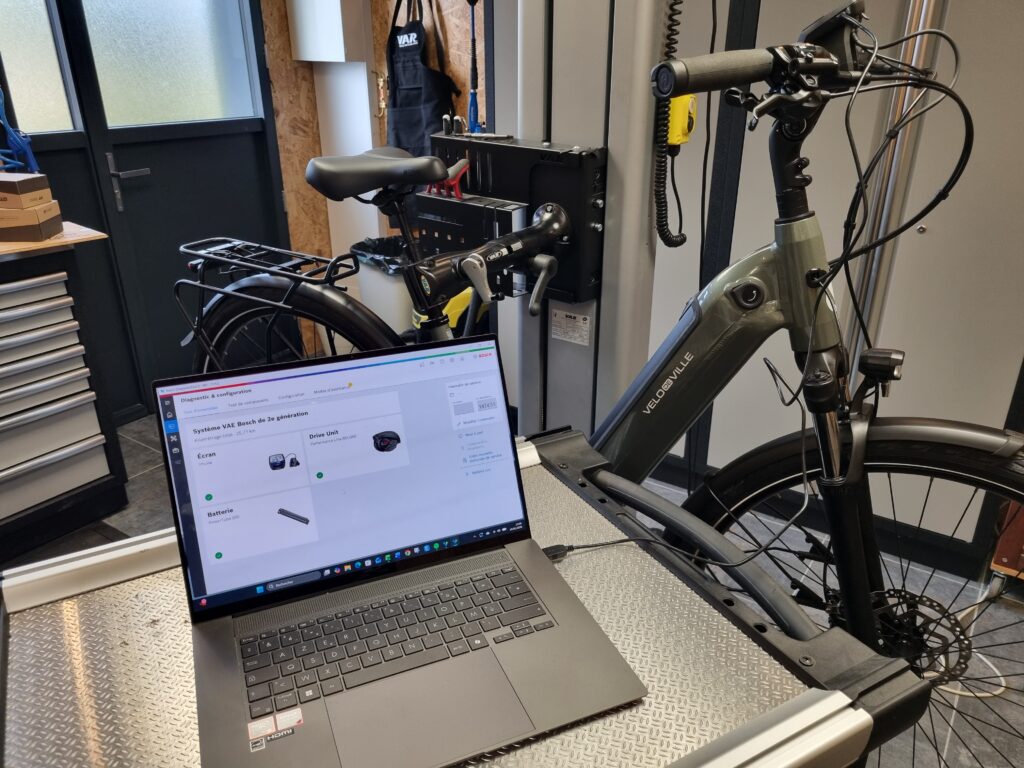
Here is an example of a customer report for an urban bike equipped with a BOSCH Performance Line motor- sorry in french.
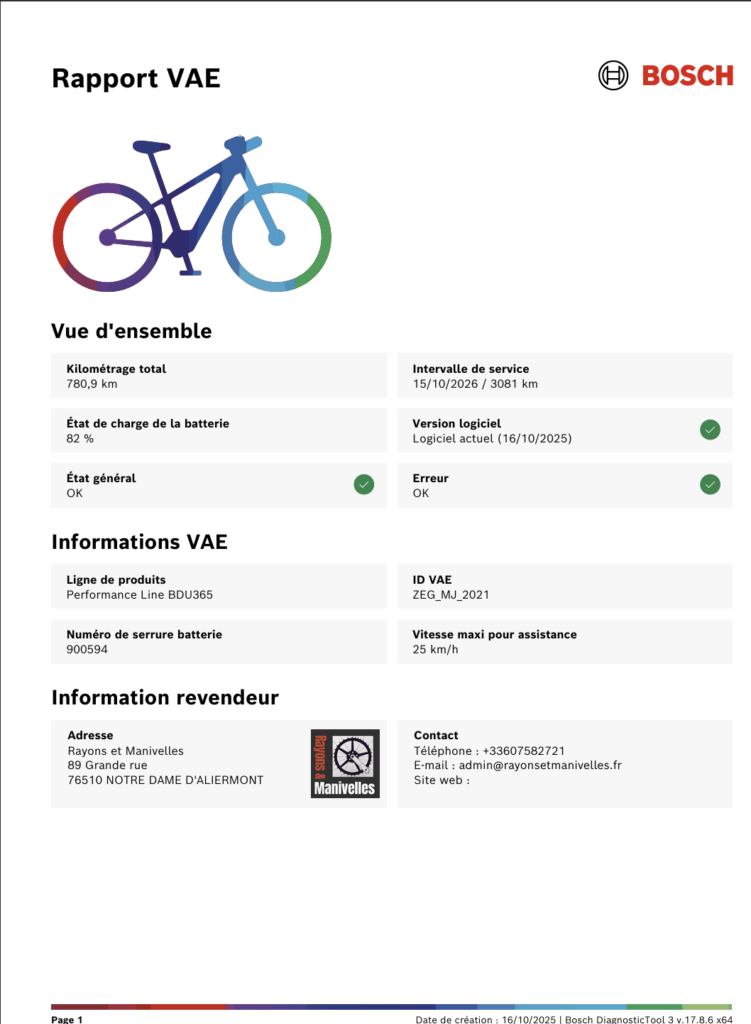
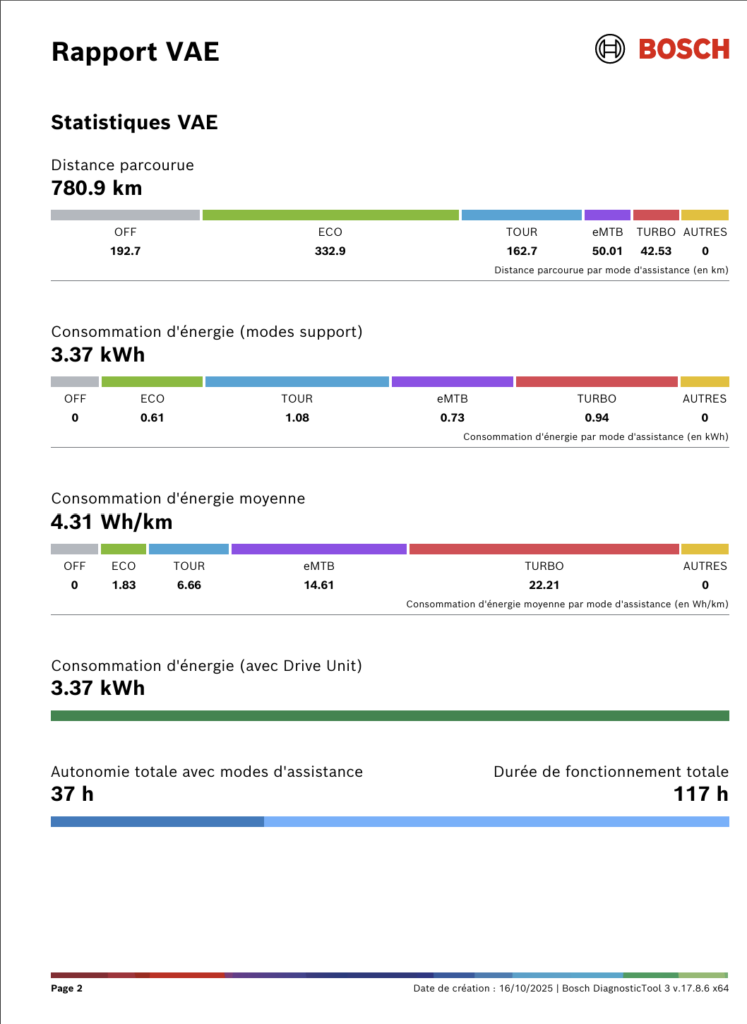
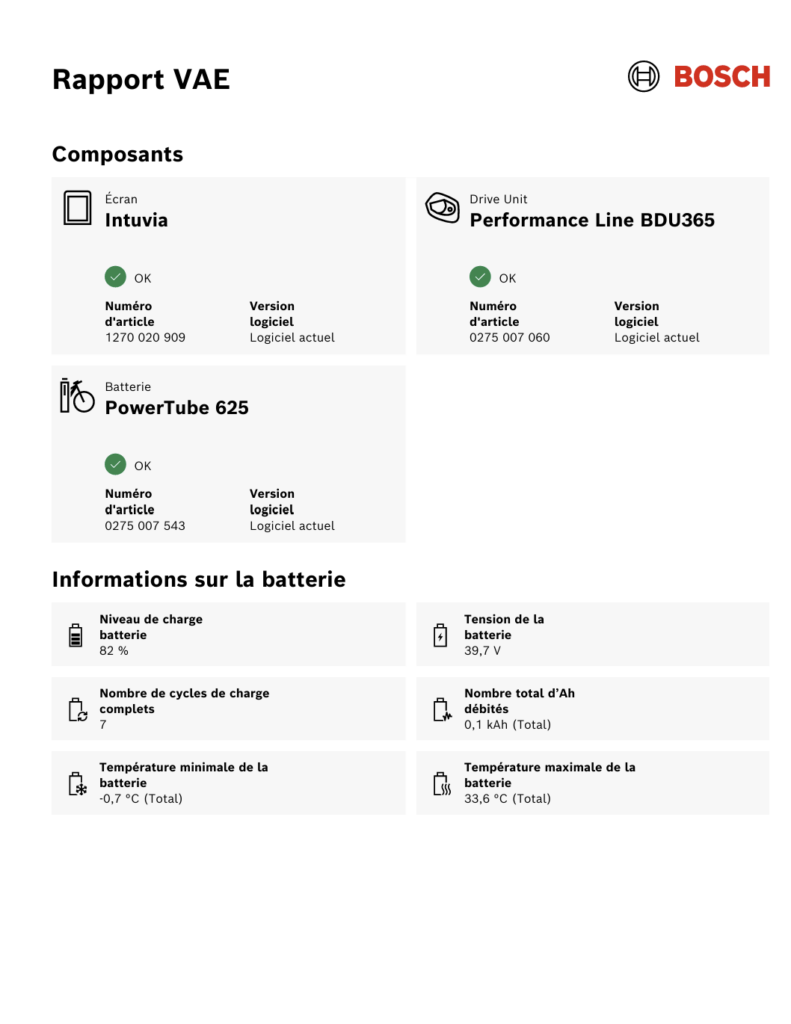
If your bike does not have a Bosch, Shimano or FAZUA motor, don’t worry: I am equipped with a multimeter to perform basic electrical diagnostics and repairs in some cases. And of course, I can perform full mechanical maintenance. However, do not expect a control report as detailed as the one you get with a Bosch or Shimano motor.
This type of diagnostic is particularly useful every 1,500 km, but an annual check-up is still recommended.
🧠 4. Maintenance Frequency
| Maintenance Task | Recommended Frequency |
|---|---|
| Quick cleaning | After each ride |
| Brake & tire check | Weekly |
| Full maintenance | Every 1,500 km or once a year |
| Electronic diagnostics | Same intervals |
Regular maintenance prevents costly breakdowns and ensures reliable electric assistance.
🧑🔧 When to See a Professional
A professional workshop should check your bike if you notice:
- Strange noises or reduced motor performance
- Battery that drains too quickly
- Persistent braking issues
- Significant visible wear on the drivetrain
🧠 Practical Tips to Remember
- Store your bike in a sheltered, dry place.
- During very cold weather, remove the battery and store it in a temperature-controlled location above 7°C.
- Clean and lubricate the chain regularly.
- Keep an eye on tire pressure.
- Have your e-bike checked by a professional at least once a year.